

Midjourney, a force shaking the world of artificial intelligence, is not only pushing the boundaries of digital art; it has also turned its attention to a massive project, Midjourney Medical, that could directly extend human lifespan and fundamentally transform medical diagnostic processes. Announced with a $74 million investment, this initiative promises to transform the hospital experience into the comfort of a health spa with a new imaging technology it calls "Ultrasonic CT."
Traditional MRI and CT: What is Ultrasonic CT?
Today, the first options that come to mind when considering whole-body scans are MRI (Magnetic Resonance Imaging) and CT (Computed Tomography), but they bring with them certain challenges. CT devices carry radiation risks, while MRI machines offer a claustrophobic experience and high costs due to strong magnetic fields. Midjourney's Ultrasonic CT technology aims to completely eliminate these problems.
Instead of using radiation or magnetic fields, the system works by using only sound waves and water. At the heart of the device lies advanced technology developed by Caltech (California Institute of Technology), featuring a circular array of 512 sensors. These sensors send sound waves into the body using a principle similar to a dolphin's echolocation ability, analyzing the signals that return from or pass through the body to create high-resolution 3D maps.
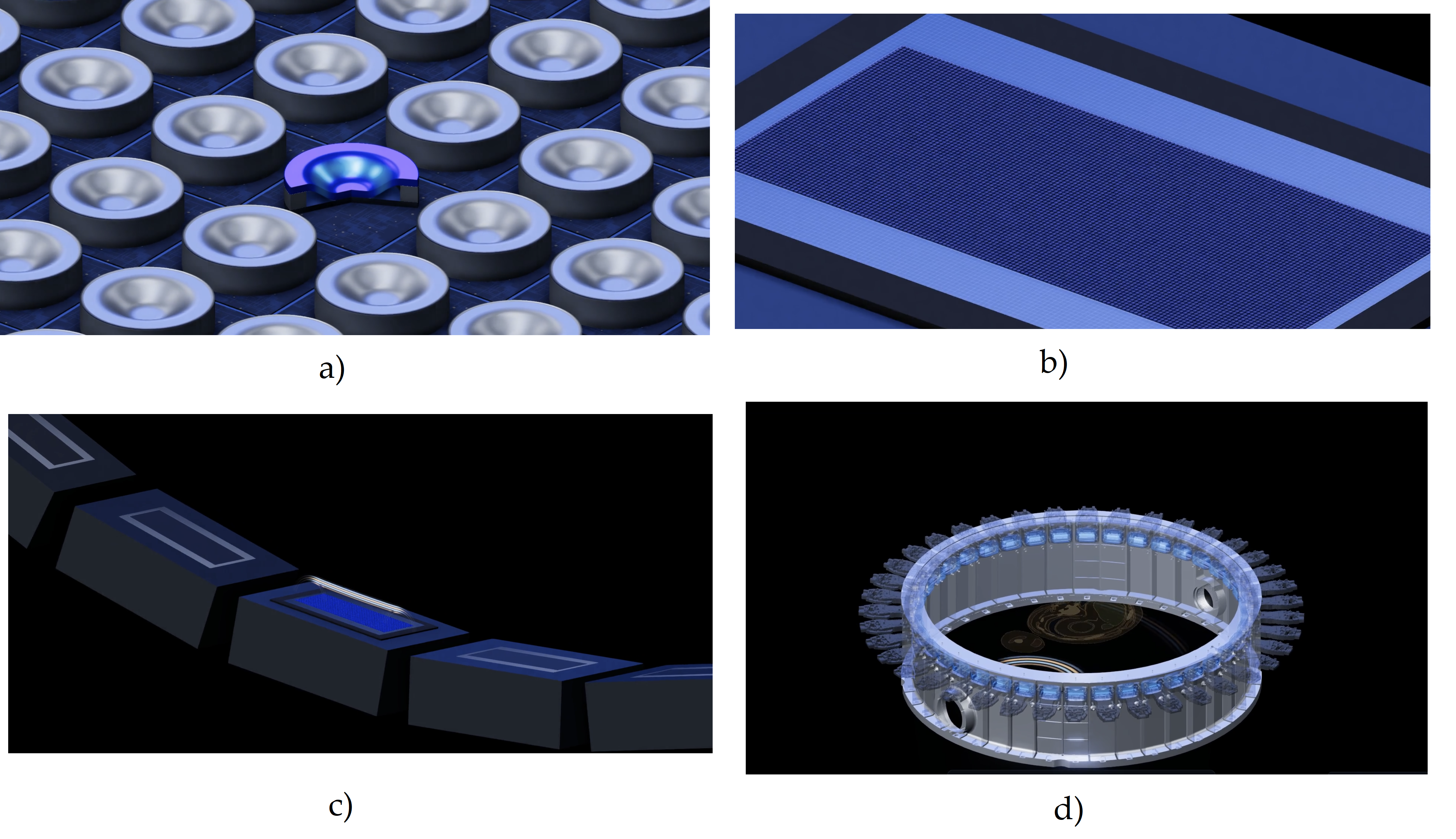
Looking closely at the sections of the image in Figure 1:
- (a): Shows the circular array of 512 sensors, which is the heart of the system. This structure surrounds the patient, creating a 360-degree sound wave network.
- (b): Represents a quantitative map reflecting the "speed of sound" measurements in the tissues. This data provides critical information about tissue density.
- (c): This is a measurement of the "attenuation coefficient," which shows how much the tissues attenuate sound waves. It plays a key role in distinguishing between diseased and healthy tissues.
- (d): Represents the final, high-resolution 3D anatomical image obtained by combining all this acoustic data, which is presented for doctors' review.
The Power Behind Science: Butterfly Network and Caltech Collaboration
Midjourney Medical isn't acting alone in bringing this ambitious technology to life. The company has signed a five-year, $74 million partnership with Butterfly Network, a pioneer in handheld ultrasound devices. Butterfly's "Ultrasound-on-Chip" technology forms the core hardware of these new scanners.
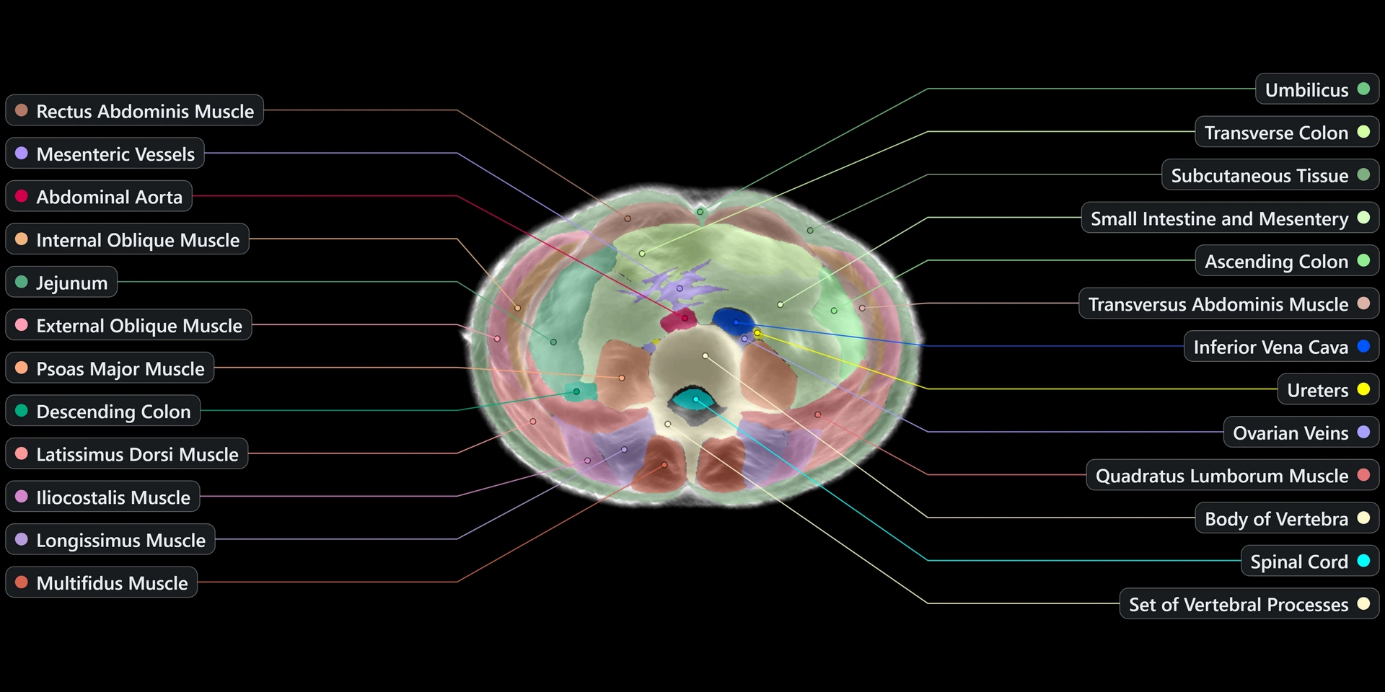
Technically, the system offers much more than traditional handheld ultrasound probes. According to data published by Caltech researchers, the system can measure not only tissue images but also quantitative data such as speed of sound and attenuation coefficient. This feature is particularly important in diagnosing conditions like fatty liver disease, cirrhosis, or fibrosis by measuring tissue density.
A "Health Spa" Experience: Diagnosis in 60 Seconds
Midjourney's vision is based on transforming medical screening from a frightening procedure into a self-care ritual. The first Midjourney is planned to open in San Francisco in 2027. The spa will include pools illuminated with golden lights, saunas, and cold water baths.

Users enter a pool of water on a special platform, and a full-body scan is completed in just 60 seconds. This speed means the process is approximately 100 times faster than traditional systems. Midjourney's goal is to install 50,000 scanners worldwide by 2031, providing regular health screenings to one billion people per month.
More Than Just Imaging: Biopsy Guidance and Adipose Analysis
This technology is not limited to diagnosis; Ultrasonic CT also has the potential to revolutionize surgical procedures. For example, a biopsy needle, operating on the principle of acoustic waveguide, can be tracked in real-time within the body at a speed of 7 frames per second. To process such a massive and continuous stream of acoustic data simultaneously from 512 sensors without delay (low-latency), advanced data fragmentation is required. Chunking strategies come into play. The massive dataset is broken down into smaller, processable chunks, distributing the load across optimized CNN and Transformer-based architectures. This allows the network to filter out noise throughout the system and focus only on the targeted spatial features, minimizing computational costs. This offers a highly secure and algorithmically agile alternative to radiation-emitting CT-guided biopsies.
Furthermore, the system is highly successful in body composition analysis. Unlike traditional calipers, it can measure subcutaneous and periorbital fat layers (adipose tissue) with millimeter precision without applying mechanical pressure.
Debates and Expert Opinions: Fact or Marketing?
While Midjourney Medical's announcement caused a stir in the medical community, it also sparked considerable skepticism among radiologists. Some experts argue that fundamental physical limitations, such as the inability of ultrasound waves to penetrate bones and air-containing organs (like the lungs), weaken the system's claim of whole-body scanning. The fact that AI has to interpolate data in these blind spots where sound waves cannot physically reach is seen as a key factor casting doubt on the clinical accuracy of the generated 3D maps.
Furthermore, the risk of overdiagnosis is another significant concern. Experts warn that undergoing a whole-body scan every month could lead to thousands of incidental findings that are clinically insignificant but cause anxiety in patients. Figures like Dr. Francis Deng of Johns Hopkins University, citing Midjourney's previous instances of producing anatomically inaccurate AI images, emphasize the need to focus on scientific evidence rather than cinematic marketing videos.
Conclusion: Is the Future of Healthcare in Software?
Midjourney Medical ushers in an era where medical devices are no longer just machines, but massive ecosystems driven by software, databases, and algorithmic models. If this technology can deliver on its promises and gain clinical approval, we could witness a new healthcare revolution where diseases are diagnosed before symptoms appear, a form of preventive medicine. For now, however, the medical world continues to wait for the raw scientific data behind these glamorous spa videos.
References
- Stempniak, M. (2026). "AI lab Midjourney investing over $74M to launch whole-body ultrasound screening business".
- AIMDek Technologies Inc. (2026). "From AI Images to Medical Imaging: What Midjourney Medical Signals for MedTech".
- Iacobucci, G. (2026). "Full body ultrasound—AI firm Midjourney pivots from image generation to launch rival health scans". BMJ (British Medical Journal).
- Garrett, D.C., Xu, J., et al. (2024). "Whole-Body Human Ultrasound Tomography". Research Square / California Institute of Technology.
- Midjourney Inc . (2026). "A New Era : Midjourney Medical and the 'Future of the Body" Official Blog.