
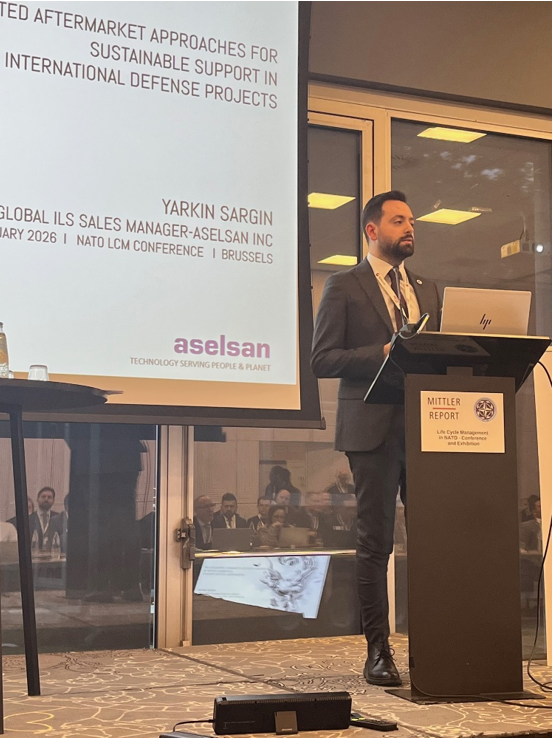
Recently, I had the opportunity not only to attend but also to contribute to the 21st NATO Life Cycle Management (LCM) Conference, where I presented a paper and shared deep insights on life cycle management and sustainment strategies for complex defense systems. The NATO LCM Conference is one of the key international forums where military organizations, defense industries and sustainment experts come together to discuss how modern defense systems can remain operational over decades.
Discussions range from digital engineering and sustainment architectures to predictive maintenance and multinational support frameworks. Participating in the conference both as a contributor and as a listener provided a valuable opportunity to observe how NATO’s thinking around sustainment is evolving.
One theme repeatedly surfaced across presentations, panels and technical discussions: The real challenge is no longer building advanced systems. The real challenge is sustaining them.
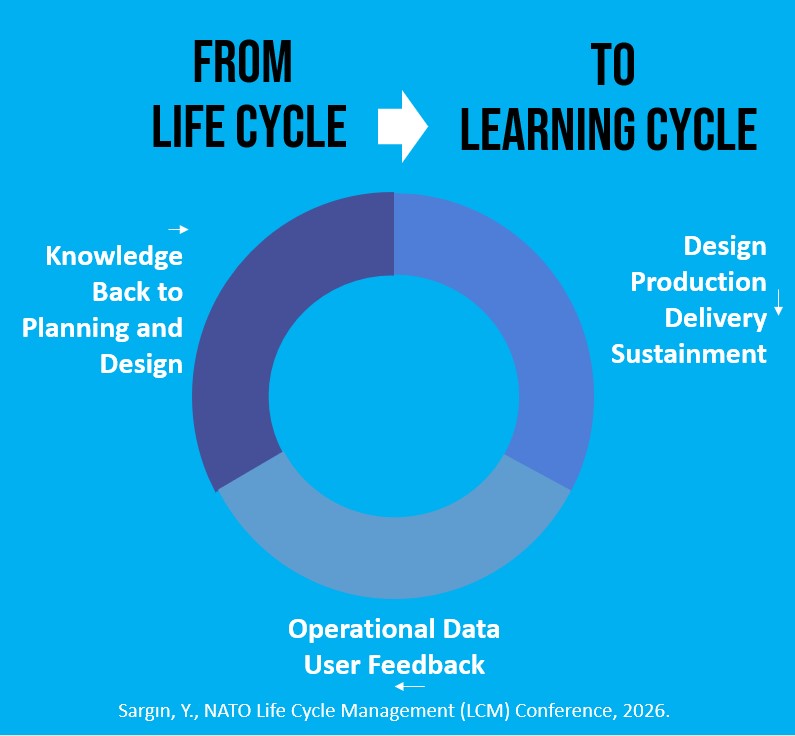
The Changing Question: From Production to Persistence
Historically, procurement processes often prioritized the development and acquisition phase. The success of a defense system was measured by whether it could be designed, produced and delivered according to specification. Today, that perspective is changing. Across NATO discussions, a new question increasingly dominates capability planning: Which systems can we keep operational under real operational conditions?
This shift is driven by several structural realities:
- Increasing system complexity
- Rapid technological obsolescence
- Distributed multinational operations
- Budget constraints over multi-decade life cycles
Under these conditions, acquisition alone cannot guarantee operational capability. The true determinant of military effectiveness becomes sustainment architecture (the ability to maintain, repair, upgrade and operationally adapt systems) throughout their lifecycle.
The Sustainment Paradox
One of the most interesting insights that emerges in NATO sustainment discussions is what might be called the Sustainment Paradox. At first glance, it might seem intuitive that identical systems should behave identically in service. In practice, however, this assumption rarely holds. Three observations repeatedly surface in sustainment planning:
- The same system is not the same contract. Even identical platforms may operate under very different support structures depending on the contractual framework governing maintenance, spare parts supply and upgrade pathways.
- The same contract is not the same readiness outcome. Two countries may sign nearly identical sustainment agreements, yet experience dramatically different operational availability depending on usage patterns, logistics infrastructure and training ecosystems.
- The same spare parts list is not the same mission tempo. Spare parts planning is traditionally based on predicted failure rates. However, operational tempo how intensively a system is used can drastically reshape real maintenance demands.
Together, these observations reveal a critical truth: Sustainment cannot be standardized purely through static logistics planning. Instead, it must be dynamically aligned with operational realities.
Operational Profiling: Understanding the System in Context
To address these challenges, NATO sustainment discussions increasingly emphasize the importance of operational profiling. Operational profiling involves understanding how systems are actually used in real missions rather than how they were originally designed to be used. Key parameters include:
- Mission frequency and duration
- Environmental conditions
- Operational tempo and deployment cycles
- Maintenance infrastructure availability
- Training levels of local technical personnel
When sustainment strategies incorporate operational profiling, support models can be tailored to real-world usage rather than theoretical assumptions. This approach shifts sustainment planning from generic support packages toward context-aware sustainment architectures.
Data-Driven Sustainment and the Role of AI
Perhaps the most transformative shift in sustainment thinking lies in the integration of data-driven sustainment models. Modern defense platforms generate enormous volumes of operational data through sensors, onboard diagnostics and mission logs. When analyzed effectively, this data enables a transition from reactive maintenance toward predictive sustainment.
Artificial intelligence and machine learning techniques can help identify:
- failure patterns
- component degradation trends
- usage-driven maintenance cycles
By leveraging these insights, sustainment planning can move from static spare parts forecasting to dynamic readiness optimization. The result is not merely cost efficiency but enhanced operational availability.
This transition from reactive maintenance toward predictive sustainment is exactly where applied academic research plays a crucial role. At VISTA Lab, we are actively developing the technological foundations for this vision through advanced deep learning and computer vision models. By focusing on high-performance anomaly and defect detection in critical components—such as identifying micro-cracks in electronic cards or assessing degradation in photovoltaic modules—we aim to transform raw sensor and visual data into actionable intelligence. Bridging the gap between operational profiling and AI-driven analysis ensures that complex defense and industrial systems remain reliably mission-ready throughout their extended life cycles.
From Logistics to Strategy
In many ways, the evolution of life cycle management within NATO reflects a profound conceptual shift. Sustainment is no longer viewed as a downstream support activity that follows acquisition; it is becoming a central pillar of defense capability planning. The critical question reshaping defense innovation is no longer simply who can build the system, but who can sustain it. Systems are evaluated not just by how advanced they are, but by how sustainably advanced they remain over time. Because in modern defense ecosystems, technological superiority is not defined only by what systems can do on day one—it is defined by what they can still do ten years later.